Brendan’s Hot Takes: Where’s the Middle Ground?

If you’ve spent any time around dog training, whether online, at the park, or working with a professional, you’ve probably noticed something pretty quickly: everyone has an opinion. And not just an opinion… a strong one.
Every dog trainer knows their job is riddled with nuance, but there are some people in this field who put blinders on and suddenly the world becomes black or white. Balanced vs. positive. Right vs. wrong. Us vs. them.
I didn’t get into this field to pick a side in a debate. I got into this for the dogs, so that’s the side I’m on. But there is a slight problem with taking sides.
There’s a growing divide in the dog training world where one group is dead set on eliminating another. The argument usually sounds something like this: “We’re saving dogs from the abuse of balanced trainers.” But let me be clear - protecting dogs from abuse is a goal I fully stand behind. No argument there. But where I struggle is in how quickly certain tools or techniques (like leash pressure or e-collar conditioning) get labeled as abuse without any context. We’ve created this idea that training is either completely “positive” or inherently harmful, and that’s just not reality. Dogs don’t live in a black-and-white world, and neither should we as trainers.
Let’s Talk About “Force”
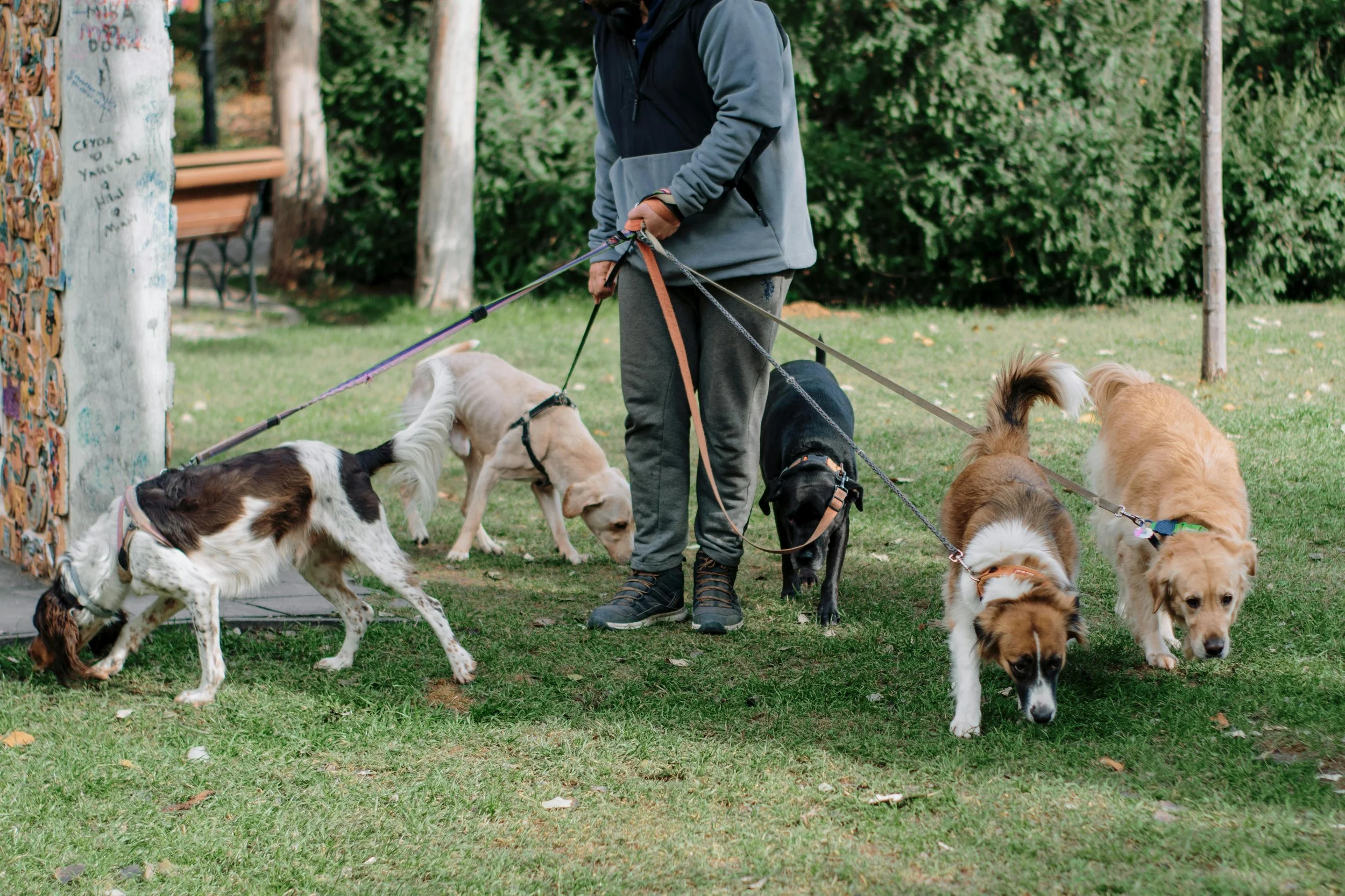
Here’s where things get a little uncomfortable. I’ll say it plainly: “force-free” is a misleading term. If your dog is on a leash, there is force involved. If your dog is being physically prevented from running into the street, there is force involved. If your dog pulls toward another dog and hits the end of the leash, that’s force. Intent matters, but it doesn’t erase physics!
I’ve seen dogs apply more pressure to their own collars or harnesses during an excited walk than anything I or my team would ever introduce in a structured training session. Now imagine that happening over and over again, every day, every walk. Multiple dogs, multiple people, constant pulling. Is that abuse? Some might say yes. I’d argue at the very least, it’s not doing the dog any favors.
On the flip side, “positive-only” training has its own contradictions.
If your entire system is built on rewards, what happens when the reward doesn’t come? The absence of something a dog expects is, by definition, a form of punishment. That’s not an opinion, that’s basic learning theory. The dog doesn’t sit there thinking, “Oh, this trainer identifies as R+ only, so this is different.” They just experience the outcome and get upset when they don’t get their treat. And that’s the piece that often gets lost in these debates. Dogs don’t care what label we put on our methods. They respond to clarity, consistency, and communication.
Where do I stand?
I’ll be the first to admit, this industry can get heated. But at the end of the day, this isn’t about proving someone else wrong. It’s about doing right by the dog in front of you.
That means understanding that not ever dog learns the same way and not every situation calls for the same approach. And not every tool is inherently good or bad! It really depends on which tool and how it’s being used. This is where my personal take on balanced training comes into play.
Balanced training, when done correctly, isn’t about domination or control. It’s about clarity. It’s about creating communication that the dog actually understands. It’s about timing, fairness, and setting boundaries in a way that makes sense to them.
What’s really hurting dogs right now isn’t one method or another, it’s the ego, the bias, and the need to be “right.” We’re letting labels and ideologies divide a space that should be collaborative. We’re more focused on winning arguments than solving problems. And in the middle of all that noise… are dogs that just need better guidance. They don’t care what camp you belong to, they care if they feel safe, understood, and can make sense of the world (and humans) around them..

Bringing It Back to Balance
At Adaptive Canine Training, my goal is simple: help dogs and their owners build a clear, functional relationship. That doesn’t come from extremes or buzz words, it comes from balance. It comes from knowing when to guide, when to reward, when to step in, and when to step back. It comes from reading the dog in front of you, not forcing them into a system that fits your beliefs. At the end of the day, this work isn’t about us. It’s about them. And they deserve better than a black-and-white answer in a world that’s anything but.