Ways to Be Adaptive for Back-to-School Season
September always seems to arrive all at once. One minute everyone is enjoying long summer days, sleeping in, and doing things on a loose schedule, and suddenly there are lunches to pack, backpacks by the door, homework, sports, activities, and approximately 47 things that need to happen before 8:00 a.m. And if you have kids and dogs, you know that getting everyone out the door can feel less like a morning routine and more like a minor logistical operation.
I say this as both a dog trainer and a parent: I get it! I have kids and a household to manage. I know exactly what it's like when everyone needs something at the same time, someone can't find their shoes, somebody else is suddenly starving, and the dog has decided that this particular morning is the perfect time to lose their mind because a leaf moved outside. And on top of managing my own household, I also get to help train your dogs, so apparently I enjoy making life extra busy for myself!
The point is, I understand how overwhelming family life can get. So when I talk about creating routines for your dog, I'm not suggesting you add another 15-item checklist to your morning. Quite the opposite, actually. Back-to-school season is a good opportunity to look at what you're already doing and find ways to naturally build your dog into the routine you already have.
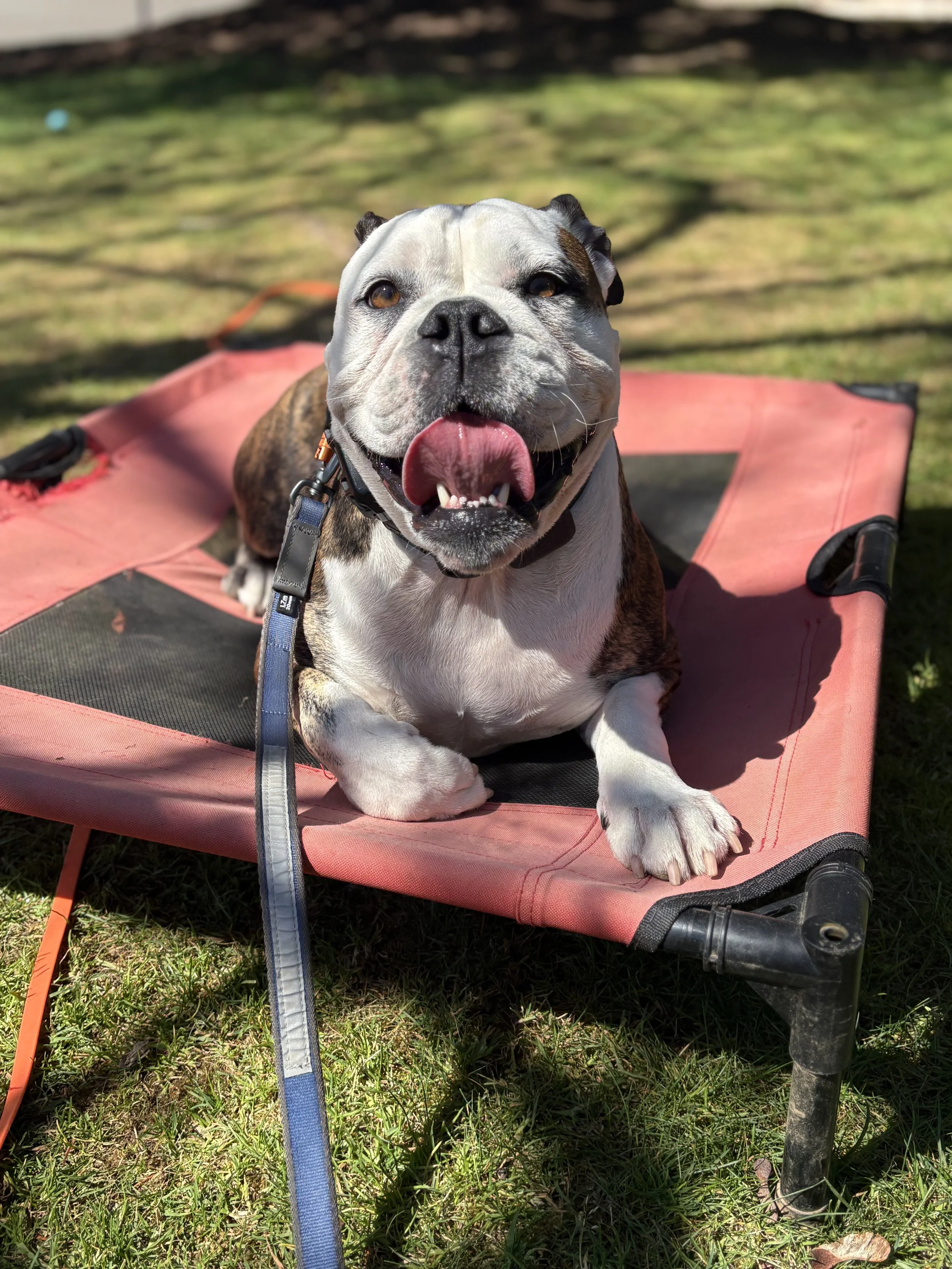
Dogs tend to do well when they know what to expect. That doesn't mean every day needs to run like a military operation, but having some predictable patterns can make a big difference. If the kids are getting up, eating breakfast, getting dressed, and heading out the door, your dog can have a predictable place within that routine.
If you start to condition your dog to follow the routines of your whole family, this will help with your household flow. Meals and downtime are great places to start, as those are core, daily activities that naturally occur with the whole family. Maybe you find some specific activities for your family, like a post-dinner walk, or having one parent walk the dog while the other helps with the bedtime routine. It doesn't have to be extra work, and it might not look the same for everyone. Look at what you're already doing and ask, Where can the dog naturally fit into this? There's also a lot of crossover between what helps kids become more independent and what helps dogs become more capable of regulating themselves.
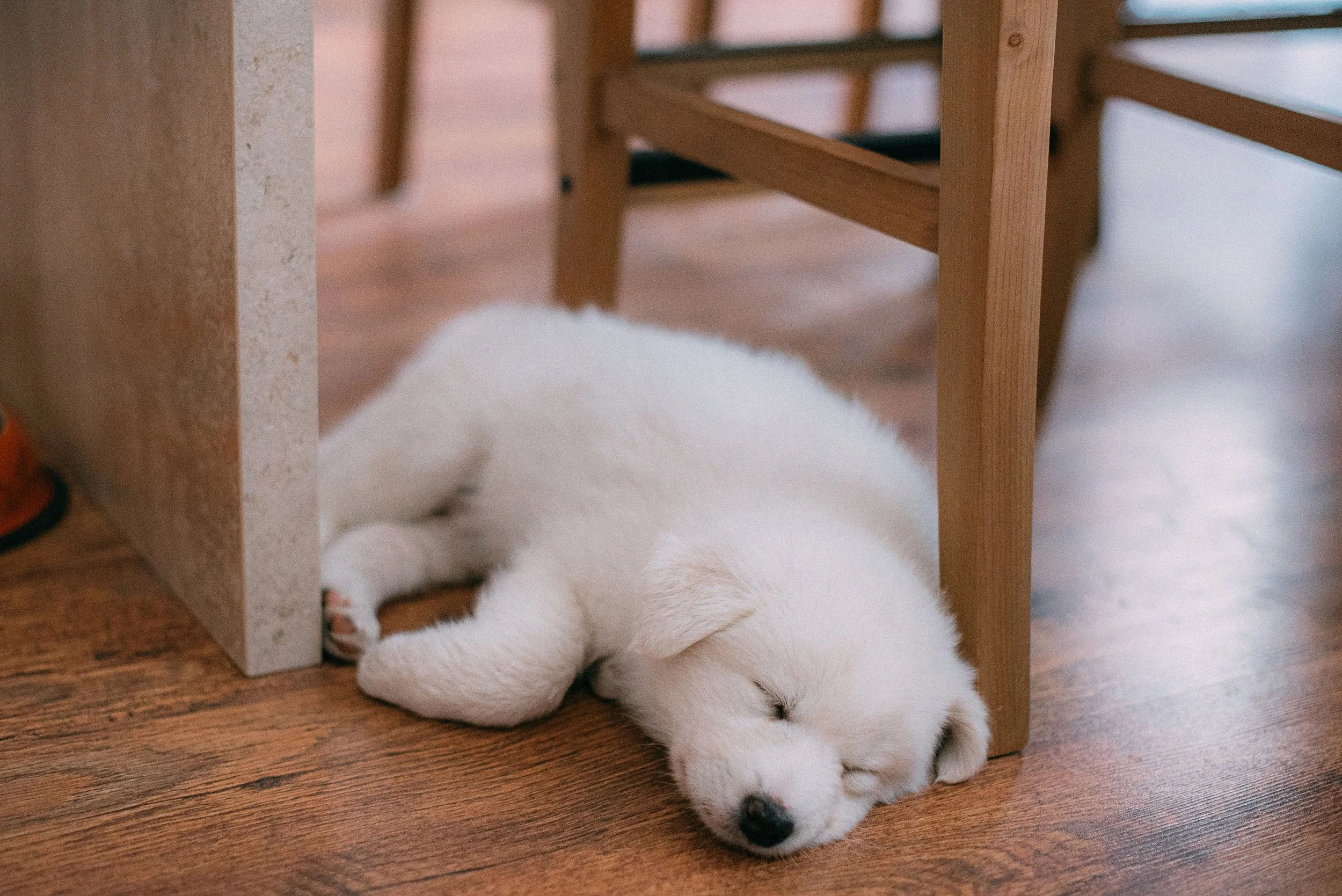
Pro Tip: Give puppies permission to be puppies!
One thing I really want families to remember as school starts back up is that puppies need a lot of sleep. When kids come home from school, they're stoked. They want to play with the puppy, show the puppy things, hug the puppy, and generally involve the puppy in everything happening in the house. And the puppy may look like they're having a great time. But sometimes what a puppy actually needs is a nap.
Overtired puppies can look like they're full of energy when they're actually struggling to regulate themselves. If your puppy suddenly becomes bitey, frantic, unable to settle, or generally seems to have forgotten every skill they've ever learned, don't automatically assume they need more activity.
This is where I like to use a simple baby-style protocol: sleep, eat, rest, and check the basics. Before trying to train your way out of a behavior, make sure the basic needs have been met. Sometimes the answer isn't more training….Sometimes everybody just needs a nap!
Here's one place where I encourage families to be pretty clear: don't let kids and dogs share toys.
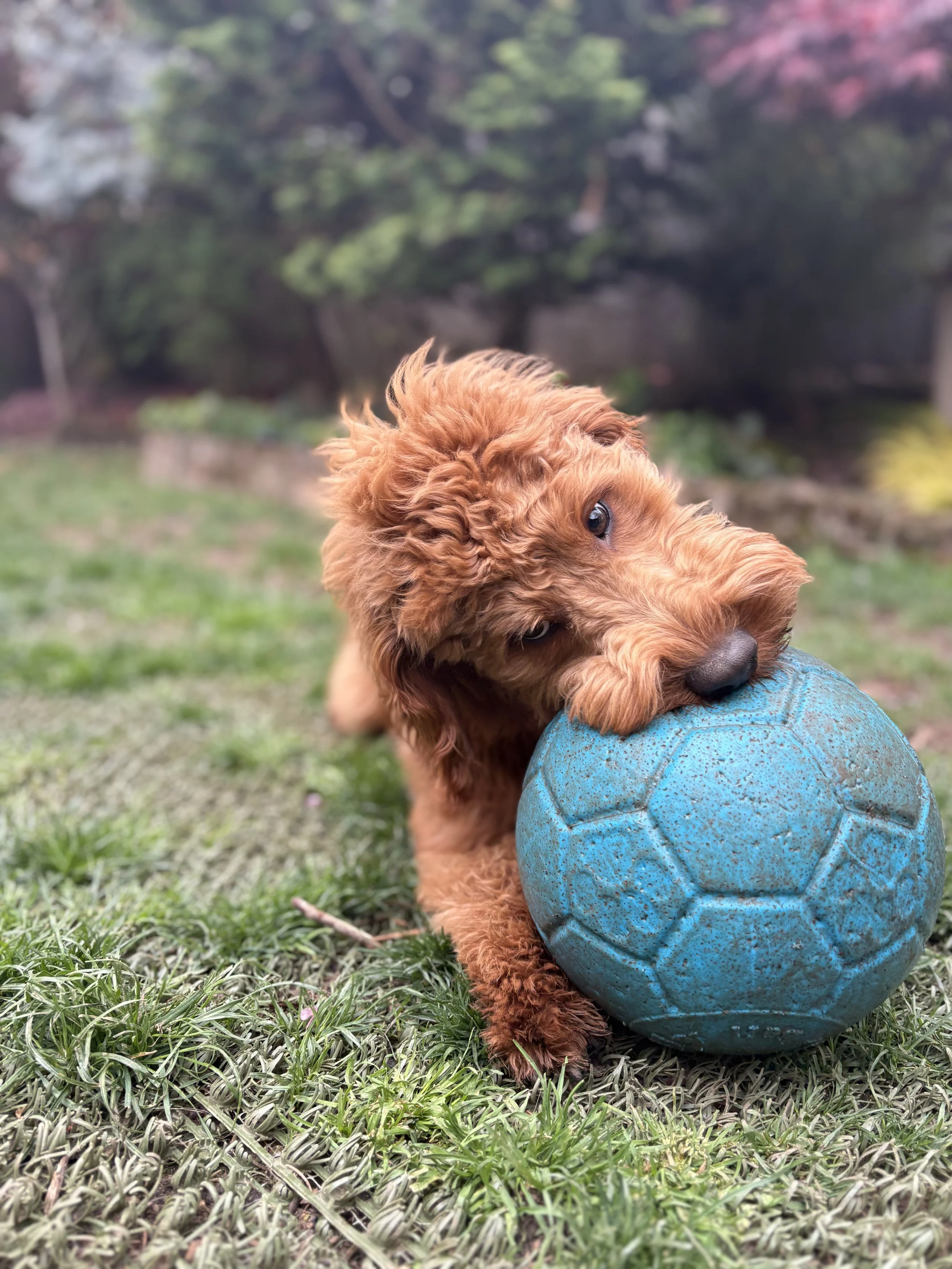
It can seem harmless. The dog grabs a stuffed animal, the kid grabs it back, everyone laughs, and five minutes later the dog is chasing the kid around the living room with a toy. But there are a couple of problems hiding in that game.
For one, kids' toys aren't necessarily clean or safe for dogs, and dog toys aren't necessarily appropriate for kids. More importantly, we can accidentally teach dogs that human hands are part of the game. That's not necessarily what we want. Our hands need to be associated with handling, grooming, care, and calm interactions - NOT automatically with grabbing, tugging, chasing, or wrestling! This is especially important for puppies, who are learning what human interaction means every day.
The goal isn't to make kids and dogs completely separate from one another. We want them to have a great relationship, but that relationship works best when everyone understands the rules. Establishing boundaries with kids is undeniably an important lesson, and getting the family dog up to speed sets everyone up for success for safe playtime and mutual cool-down time!
What if my dog is still freaking out?
Time to go back to basics! This is another place where the lessons from my previous post about self-regulation come into play. If your dog is struggling to settle, don't immediately assume you need a new command, a new trick, or a more complicated training plan.
Remember the baby-style protocol we just talked about? Have they slept? Have they eaten? Do they have water? Have they had a chance to go outside? Have they had some quiet time?
We sometimes expect dogs to self-regulate without giving them the opportunity to practice it. Dogs can absolutely learn how to settle themselves, and we should reinforce those skills when they do. But self-regulation doesn't mean self-sufficiency.
Your dog still relies on you for food, water, shelter, exercise, access to the outside world, and a safe environment. That's part of the deal when we bring an animal into our family. So while we're teaching dogs to do more things independently, we shouldn't forget to provide the things they simply can't provide for themselves.
And honestly, this is where being a parent has made me think about dog training differently, too. When you've got a household full of people and animals who all have needs, you start to appreciate just how important it is to distinguish between "I need to help you" and "I need to let you figure this one out." That applies to kids, dogs, And, occasionally, it applies to adults who have convinced themselves they can carry six grocery bags in one trip.
Back-to-school season is actually a great opportunity to teach kids how to participate in caring for a dog. Give them consistent, age-appropriate responsibilities; making sure the water bowl is full, helping with meal times, putting dog toys away with their own toys, or recognizing that the dog is having quiet time and shouldn't be bothered.
There are plenty of little things kids can learn to do that don't require you to hover over every interaction. The important part is consistency. If everyone in the house uses the same language and follows the same general rules, the dog gets a much clearer picture of what we're asking.
And the kids benefit, too. They're learning how to read another animal's behavior, respond appropriately, respect boundaries, and take responsibility for someone else's needs. Some of the best ways to prepare for a busy season aren't really "training" at all. Have your whole family involved with keeping the water bowls clean, making sure there’s wipes for dirty paws, leash is accessible for impromptu walkies, etc..These things sound incredibly basic, but when you're trying to get everyone in and out the door, basic is good.
I've never met a parent who complained that they were too prepared for the morning rush. Okay, maybe I've met a few parents who were overprepared. But they're usually the ones I want to be friends with.
Adaptive = Balanced
This is probably the biggest thing I want families to take away from this: You don't need to add a giant list of dog-training tasks to your already-growing back-to-school checklist. Instead, look at your existing family routine and find the opportunities that are already there.
Small things add up; the morning routine is consistency, quiet reading/homework is rest time, packing lunches can be an opportunity to practice boundaries around food, cleaning up toys can include putting dog toys where they belong. The goal isn't a perfectly scheduled household where everyone does exactly the right thing all day long, it’s to build a household where kids and dogs understand how to live together. Everyone has opportunities to become more independent, and the humans remember that being adaptive sometimes means going back to the basics.
As the seasons change and your family's schedule changes with them, don't forget to bring your dog along for the transition. They need to know that they're still part of the family, and that you've got their back while they learn how to navigate the new routine.